Curated: Who Leaves the Trolley? What a Viral Meme Teaches Pharma R&D About Quality, Culture, and Ethics
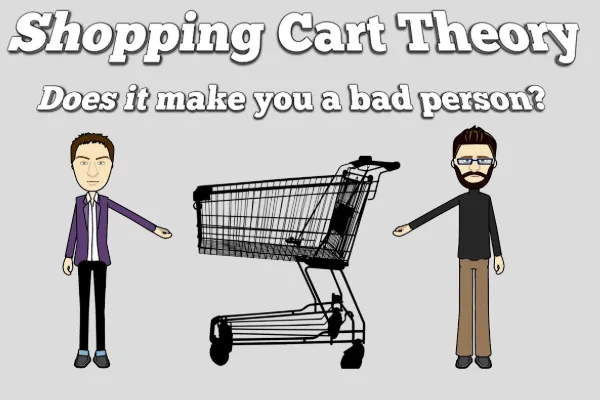
I watched a short video (you can find it at the bottom of this article) about the “shopping cart theory” a meme making the rounds in 2019. It claims you learn a lot about someone’s character from whether they return a supermarket trolley when nobody is watching. It immediately reminded me of a line we often use in pharma: quality is what you do when people aren’t looking.

This article explores that link. I will separate compliance from quality, test the “job creation” logic from the video against a common industry mindset of “QC will catch it” or “QA will find it”, and show how social norms can sink even the best new hires. I will finish with practical steps you can take this quarter.
Compliance vs quality
In our sector, compliance is a legal baseline. Frameworks such as OECD GLP set out roles, responsibilities and independence of the Quality Assurance unit to provide objective oversight of studies and systems. They specify what must be in place and who is accountable for checking it.
Quality is broader. It is the collective commitment to do things right, first time, because patients depend on our outputs. Modern guidance expects risk-based thinking to inform decisions, but it is explicit that risk management must not be used to justify practices that would otherwise be unacceptable. In other words, “risk-based” is not permission to cut corners.
Industry groups have pushed this further. ISPE’s work on quality culture argues that organisations perform best when people are intrinsically motivated to reduce mistakes, learn, and improve, not merely to pass inspections.
“Job creation” and the QC/QA safety net
The video toys with a provocative idea: if everyone leaves their trolleys scattered, shops will hire more staff to tidy them, which “creates jobs”. We hear a related version in labs and clinical operations: “don’t worry, QC will catch it” or “QA will flag it before sign-off”.
Two problems:
It shifts cost from prevention to appraisal and failure. The Cost of Quality model is clear. Money spent catching errors late (appraisal) or fixing them after discovery (failure) is far more expensive than preventing them. Prevention reduces rework, delays and reputational damage.
It starves investment in better science. Analyses across life-sciences show that stronger quality practices often reduce total cost over time, by cutting recalls, rework and investigations, freeing resources for development.
Put simply, relying on QC/QA to “tidy up the car park” creates work, but it is the wrong kind of work.
Culture is contagious: when good people start leaving trolleys
Social-psychology has long shown that visible norms drive behaviour. People litter more when they see others littering, and less when the environment signals that tidiness is the norm. This is the classic “descriptive norms” effect.
I have seen the same in pharma. Years ago, I worked in an organisation with a weak culture. Two excellent scientists joined us from a highly regarded lab. I assumed this would be the turning point. For a few weeks their work was exemplary, a model of clear records and thoughtful controls. Then the slide began. Under daily pressure and surrounded by “that’s good enough”, their documentation, checks and general care fell toward “barely passable”. The environment taught them to leave the trolley.
This is close to what Diane Vaughan called the normalisation of deviance. Small departures from the standard become normal when nothing obviously goes wrong. Over time the boundary of “acceptable” drifts, until one day it isn’t acceptable at all.
Ethics when no one is watching
The trolley meme frames the choice as ethical: return it because it is right, not because of reward or punishment. That maps neatly to our world. Ethical behaviour in pharma R&D is not simply avoiding fraud. It is the everyday integrity of complete raw data, accurate timestamps, protocol adherence, and reporting inconvenient findings. Risk-based quality management exists to guide judgement, not to excuse workarounds.
If you expect a tidy car park, you return your trolley. If you expect trustworthy science, you complete your records properly, even when late and tired. Our public licence depends on that.
So who leaves the trolley in your organisation?
Two useful questions:
Who already leaves their trolley? People who see QA as “police”, areas with chronic workload peaks, leaders who openly trade compliance for speed, teams with high investigator turnover.
Who might leave it if no one was looking? New hires absorbing local norms, high performers who are rewarded for speed alone, contractors distant from the consequences, and anyone working in a process designed with friction that makes the right action harder than the wrong one.
What should QA do differently?
Here are practical moves that go beyond “write a SOP” and “run a training”.
Make the right thing the easy thing. In car-park terms, add more trolley bays. In labs, that means simplified templates, pre-filled metadata, barcoding, and smart prompts in eSystems that reduce the cognitive load of doing it right first time.
Broadcast the norm. Use visible cues that “this is how we work here”. Calibrate reviews to the same standard and publish short “before and after” examples of good entries. Social-norm research shows that clarity about what most people do reduces drift.
Design risk-based QA oversight to surface weak signals early. Blend targeted process audits with data-led surveillance of error patterns. Use QRM as intended: a disciplined, transparent decision process, not a label for ad hoc judgement.
Shift conversations from blame to ownership. Borrow from “just culture” thinking in safety-critical industries. Separate reckless choices from system traps. Fix traps quickly and respond proportionately to choices.
Close the ethics loop. In team huddles, link everyday actions to patient risk and public trust. Five minutes is enough. People behave more ethically when consequences are concrete and near.
Measure the cost of leaving the trolley. Track prevention, appraisal and failure effort. When leaders see what late discovery truly costs, prevention budgets stop looking optional.
Model the behaviour. Leaders and QA alike should “return the trolley” in small ways. Capture your own deviations, fix them, and tell people that you did.
A note on investment
The video argues that bad behaviour “creates jobs”. In our world, letting systems catch errors simply creates more appraisal and failure work, which is the most expensive quality spend you can have. The smarter bet is deliberate investment in prevention and cultural excellence. It improves reliability and often reduces total cost over time.
A challenge for this week
Walk the floor and quietly ask: where is it physically or cognitively hard to “return the trolley” in our processes?
Choose one friction point and remove it within 30 days.
Run a norms check in your next team meeting: “What does ‘good’ look like when no one is watching?”
As QA, pick one group likely to “leave the trolley” and change how you engage with them. Less policing, more co-design. Bring one small change they asked for to your next oversight discussion.
If you try this, tell me what you learn. The real test of quality is rarely an inspection. It is the sum of what your people do when they think no one is looking.
Final thought:
in your organisation, who returns the trolley every time, who only does it when watched, and who leaves it blocking the bay? More importantly, what will you as a QA leader change this month so that returning it becomes the easy, obvious, and proudly normal thing to do?
Sources and further reading
Principles of Good Laboratory Practice, OECD.
IQ9(R1). Quality Risk Management, ICH, 2023
Cultural Excellence Report, ISPE, 2017.
A Focus Theory of Normative Conduct: A Theoretical Refinement and Reevaluation of the Role of Norms in Human Behavior, Cialdini et al. Advances in Experimental Social Psychology, Vol 24, 1991
Normalization of Deviance, Vaughan, D, 2010
Cost of Quality, ASQ.
Manufacturing quality today: Higher quality output, lower cost of quality. McKinsey & Company, 2017